American Torso (film by Gábor Bódy, 1975)

The ELTE–NFI University Film Club screening and discussion series continues. We welcome university members from all ELTE faculties.

The experimental film takes place in North-Caroline. In the last days of the American Civil War three prominent figures from the 1849 Hungarian emigration fight on the side of the North: János Fiala, cartographer and artillery officer, scientist and rationalist; Ádám Vereczky, the heroic fatalist and Fiala’s assistant; as well as the emotional Boldogh, who struggles with homesickness. The fate of these „slowed-down” revolutionaries is equally bleak. The swaggering Vereczky meets a senseless death on a giant swing, which he manages to measure with his theodolite. Boldogh longs for home, perhaps to die; for Fiala, a single possibility looms: he can take part in the construction of the Pacific Railroad.

The archaic word ‘anzix’ refers to a postcard, as if we were looking at a contemporary document. But Gábor Bódy’s graduation film is an experimental work through and through. From time to time, the illusion of period authenticity is shattered, surprising and jarring the viewer.


Date: 7 October 2026, 6 p.m.

Venue: ELTE University Library and Archives, community space (1053 Budapest, Ferenciek tere 6.)


Director, screenwriter: Gábor Bódy

Cinematographer: István Lugossy

Editor: Péter Tímár

Music: Ferenc Liszt, Ferenc Sebő

Cast: Sándor Csutoros, György Cserhalmi, András Fekete, László Felföldi, Keith Craine, Ed Hewitt


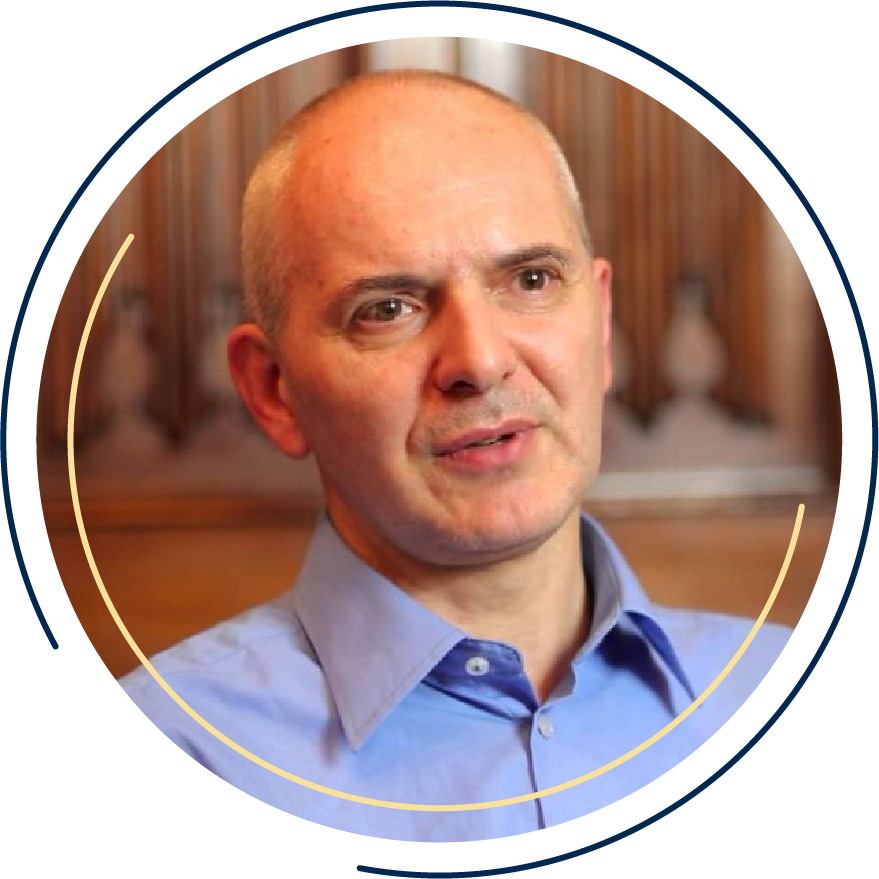
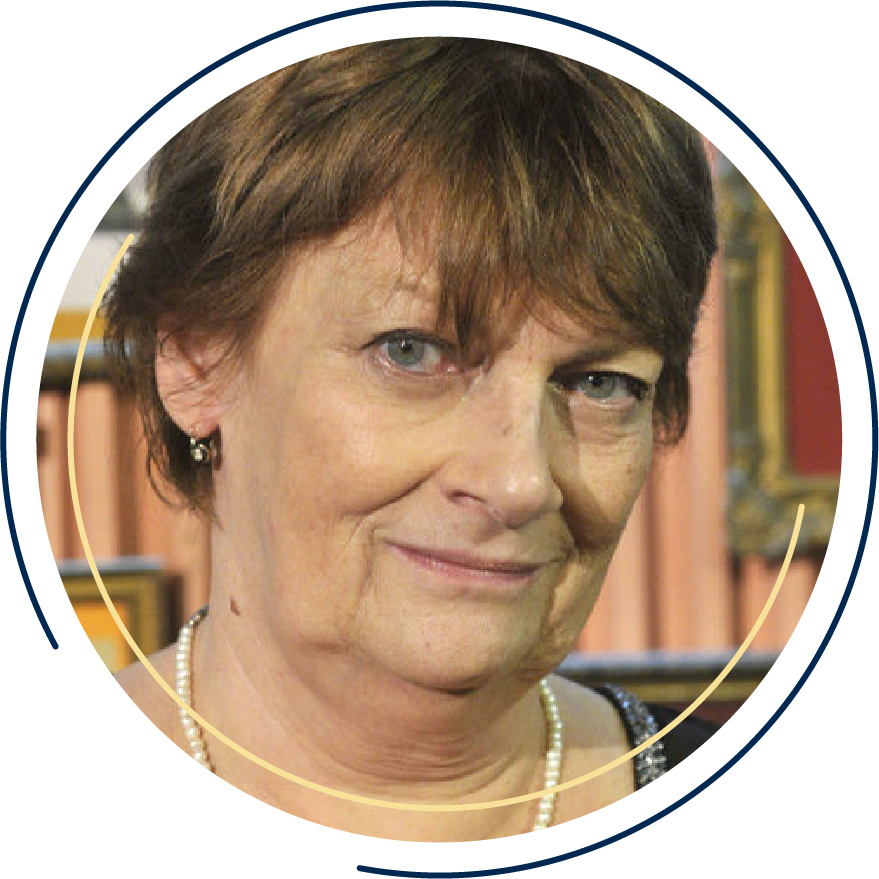
Our guests for the post-screening discussion will be Róbert Hermann, Széchenyi Prize-winning Hungarian historian, journalist, and writer; and György Farkas, film historian and researcher of Gábor Bódy’s oeuvre.


Hermann Róbert
             Róbert  Hermann
Farkas György
               György Farkas


Trailer: https://www.youtube.com/watch?v=dfYuPyKgBn0

Due to limited seating, please register in advance at https://www.ajk.elte.hu/amerikai-anzix-1975.

The organisers welcome emails regarding the film club at eltenfi.filmklub@elte.hu 

ELTE–NFI Filmklub Facebook page


Source/author of illustration:
National Film Institute

Wall Driller (directed by György Szomjas, 1986)

The ELTE–NFI University Film Club screening and discussion series continues. We welcome university members from all ELTE faculties.

A cult film about life in public housing estates and that quintessentially Hungarian spirit of resourcefulness, which manifests itself in scheming and finding loopholes. Our protagonist, Géza, announces to his wife at home that the time has come for him to start his own business, and he decides to become a wall driller. He buys a drill and drills holes in the concrete walls of apartments in the housing complex, according to the requests of the homeowners who hire him. He takes orders at the café, where many expectant mothers pass the time.

Today, The Wall Driller is more than just a historical document of 1980s Hungary. As we laugh at the situations, the world in which everyone is trying to get by – with varying degrees of success – may feel increasingly uncomfortably familiar.


Date: September 30, 2026, 6:00 p.m.

Venue: ELTE University Library and Archives, community space (Budapest, 1053 Ferenciek tere 6, ground floor)


Director: György Szomjas

Screenwriters: Ferenc Grunwalsky, Ibolya Fekete, György Szomjas

Cinematographer: Ferenc Grunwalsky

Editor: Anna Kornis

Music: János Karácsony

Cast: János Bán, Ági Szirtes, Renáta Szatler, Éva Tóth, Péter Andorai, Dénes Ujlaki.


Our guests during the post-screening discussion are Ibolya Fekete, one of the film’s screenwriters and Béla Balázs Award-winning film director; as well as János Bán, a Jászai Mari Award-winning actor, a Meritorious and Outstanding Artist, a founding member of the Katona József Theater, and the film’s lead actor.


Fekete Ibolya
          Ibolya Fekete
Bán János
              János Bán


Due to limited seating, we ask that you register in advance at https://www.ajk.elte.hu/falfuro-1986.

The organisers welcome any correspondence regarding the film club at eltenfi.filmklub@elte.hu.

ELTE–NFI Film Club Facebook page


Source/author of illustration:
National Film Institute

Heritage and Presence – People and Memory in a 150-Year-Old Space

At the celebratory conference marking the 150th anniversary of the library palace, the photo exhibition by Márta Csikós opened in the community space of the ELTE University Library and Archives entitled “Heritage and Presence – People and Memory in a 150-Year-Old Space,” which focuses on the building and the staff whose daily work ensures the library’s operations.

The photographs in the exhibition both document and tell a story. They reveal the quiet moments of work, the deep concentration, the relationship between people and space, and the unique atmosphere that has existed within these walls for 150 years. Here, the built heritage appears not merely as a backdrop, but as a witness, preserving the memory of our predecessors while also providing a framework for the daily activities of those who still consider serving knowledge their calling.

The photographs sensitively reveal a world that often remains hidden. They reveal the responsible care for books and documents, as well as the sense of vocation that has characterised library staff for generations – those who, day after day, ensure that the knowledge accumulated over the centuries remains accessible to future generations. The photographs bring to light the quiet service without which the preservation of cultural heritage and the transmission of knowledge would not be possible.

The exhibition pays tribute to the 150-year-old library building, while also honoring all those who, through their work, knowledge, expertise, and dedication, have helped ensure that the ELTE University Library and Archives continues to serve as a vibrant and inspiring institution for our community. The images on display encourage visitors not only to admire the beauty of the building but also to turn their attention to the library’s staff, who are not merely participants but the ones who continue to write the story: those who, through their dedicated work, enrich the history of this 150-year-old institution with new chapters time and again.

All visitors are welcome!


Fotókiállítás a közösségi térben


Source/author of illustration:
ELTE, Gábor Rusznák & ELTE ULA, Márta Csikós

The Cultural Heritage Day in the ELTE University Library and Archives was a great success

Through our event organised at the ELTE University Library and Archives as part of this year’s Cultural Heritage Days, we sought to draw attention to the protection of our cultural values and the preservation of our built heritage.

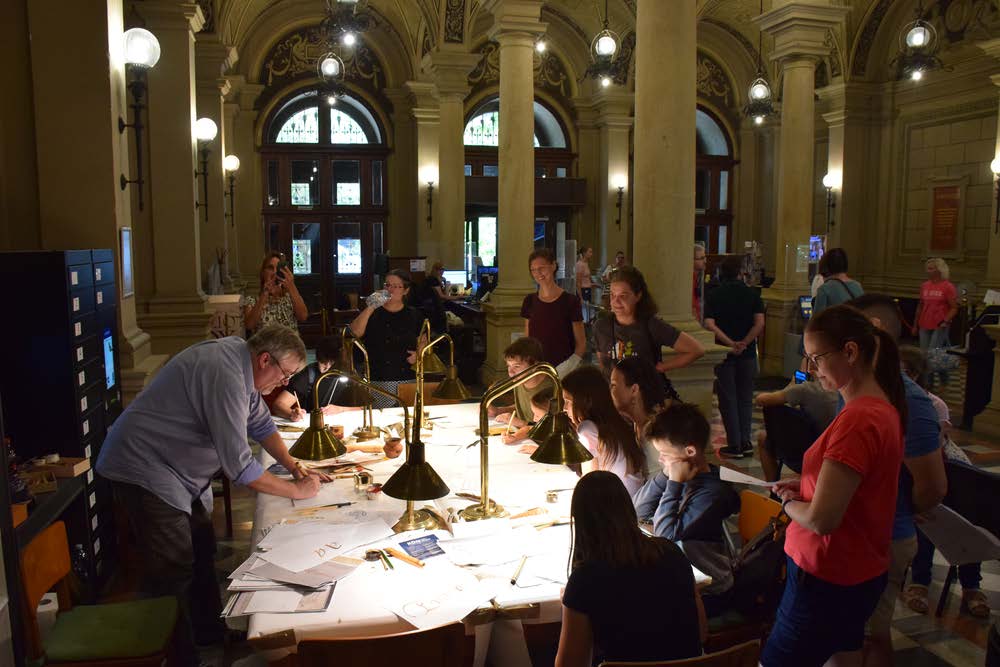
During our series of events, visitors were able to take part in guided tours on the history of the library and presentations on the restoration workshop, as well as try their hand at calligraphy and bookbinding workshops. The programs were further enriched by quizzes, jigsaw puzzles, bookmark coloring, and our exhibition on the history of the university, while a classical music concert rounded out the day.

This year’s programme series also offered a glimpse into the history and unique treasures of the Library Palace, which is celebrating the 150th anniversary of its opening. Our interactive exhibition, which presents the library’s history and interesting anecdotes from a new perspective, remains on display near the grand staircase in the lobby, along with our short film presentation.

The chamber exhibition entitled Knowledge Preserved Within Walls – One and a Half Centuries of the University Library Building recalls key moments in the building’s century-and-a-half-long history through a selection of special items from our collection.

Our event concluded with a concert by clarinetist Zsolt Szigeti and bassoonist Attila Ambrózy, who performed pieces by Ludwig van Beethoven as well as excerpts from works by Mussorgsky, Bizet, and Bernstein, providing a worthy musical finale to the series of events.


Kalligráfiai workshop


Source/author of illustration:
ELTE ULA

The 150-Year-Old Library Building in the Service of the University

The commemorative conference marking the 150th anniversary of the library building concluded successfully at the ELTE University Library and Archives.

As the opening event of the anniversary celebration, Rector Dr. Lénárd Darázs and Chancellor Dr. Gyula Scheuer, representing Eötvös Loránd University, as well as Zsolt Sári, State Secretary for Public Collections and Heritage Protection from the Ministry of Social Relations and Culture, delivered welcoming remarks.

Dr. Lénárd Darázs, Rector of Eötvös Loránd University, welcomed the audience of 140 people gathered for the anniversary event, recalling the ceremonial inauguration of the Library Palace in 1876, at which Károly Than, then rector of the university, and Ágoston Trefort, Minister of Religion and Public Education, also delivered speeches. He highlighted the university’s progressive role in Hungarian higher education, culture, teacher training, and public education, emphasising that the University Library building symbolises ELTE’s historical, cultural, scientific, and educational roles alike. In his welcoming remarks, Dr. Gyula Scheuer, Chancellor of Eötvös Loránd University, highlighted not only the cultural and digital heritage but also the efficient work of the staff working within the library’s walls. Dr. Zsolt Sári, State Secretary for Public Collections and Heritage Protection, speaking at the home of the country’s first – and for centuries, only – state university library, in Hungary’s first palace designed and built specifically for library purposes, explained that the state’s current role is primarily to provide a fitting framework for the university’s operations.

In her opening address, Director General Dr. kulcsár Szabó Ernőné Gombos Annamária, noted that the mission of the University Library – which is celebrating its 465th anniversary this year – as the first state-funded public library was defined by Maria Theresa in 1777 as ensuring open access to the university’s body of knowledge, and to fulfill the initial functions of a national library.

The iconic palace that houses the institution – and symbolizes every aspect of the scholarship embodied by the university – was completed in 1876 based on the architectural plans of Antal Szkalniczky (1836–1878), and for nearly 120 years, it has faced significant challenges in accommodating the ever-expanding scholarly collection and the dynamic growth in the number of university students. Today, in the age of digitisation and artificial intelligence, the building’s primary purpose is to provide students with a complex learning environment – a need clearly demonstrated by the fact that more people are using the same space today than ever before.

In his lecture, Research Professor Dr. József Sisa paid tribute to Antal Szkalniczky’s life’s work and design philosophy, focusing on the library building as a work of art. Art historian Dániel Kovács presented the 20th-century transformations of the library building, illustrating them with examples from the same period, while architects Miklós Péterffy and Bálint Dőry outlined their conceptual plan for the expansion of the University Library building, featuring new community and learning spaces that are open and freely connected to public spaces – spaces that offer an elegant, contemporary, and creative solution to the space constraints that have existed for 120 years, while also evoking and paying homage to the building’s original design.

The interactive installation, which was officially unveiled at the conference, offers some interesting facts related to the building’s history and the life that takes place within it.

As a key player in open scientific infrastructure and research support, the institution continues to provide an open space for in-depth learning, while also serving community-building goals; which is why – in response to student needs – the BoYL community space, created as part of the international student inclusion project, was renovated, and two new rooms were opened, expanding the space available to the university community by an additional 30 seats. Dávid Zubreczki delivered a welcoming speech at the ceremonial opening of the new community spaces. A photo exhibition by Márta Csikós entitled “Heritage and Presence – People and Memory in a 150-Year-Old Space,” which focused on the staff members who ensure the building and library’s daily operations through their work, was opened by Gábor Lakos, a photojournalist for HVG.

Source/author of illustration:
ELTE, Photo by Gábor Rusznák

Film Club Special Edition at Researchers' Night – The Life and Work of László Krasznahorkai Through the Films of Béla Tarr: "Damnation"

The ELTE–NFI FILMIO University Film Club aims to pay tribute, through the programme organised on the occasion of Researchers’ Night, to László Krasznahorkai, who was awarded an honorary doctorate from ELTE in September 2026, and to film director Béla Tarr, who passed away this year. This was the film they worked on together for the first time, and for which they co-wrote the screenplay. This brought Tarr his first international recognition.


Date: 25 September 2026, 7:00 p.m.

Venue: ELTE University Square Campus, Emilia Weiss Hall (1053 Budapest, Egyetem tér 1–3, ground floor)


Director – Béla Tarr

Screenwriter – Béla Tarr, László Krasznahorkai

Cinematographer – Gábor Medvigy

Editor – Ágnes Hranitzky

Composer – Mihály Víg

Stars: Miklós Székely B., Hédi Temessy, Vali Kerekes, Gyula Pauer, György Cserhalmi, Péter Breznyik Berg.


Preview: https://www.youtube.com/watch?v=LkO01nO5tVU

Our guests during the post-screening discussion are:

András Bálint Kovács – film aesthete, university professor
Tibor Gintli – literary historian, university professor
Katinka Tóth –law and literature researcher, assistant professor


Kovács András Bálint
          András Bálint Kovács
Tóth Katinka
                 Katinka Tóth
Gintli Tibor
                    Tibor Gintli


Due to limited seating, we ask for advance registration on the Researchers' Night website: https://app.kutatokejszakaja.hu/esemenyek/elte-allam-es-jogtudomanyi-kar/krasznahorkai-laszlo-eletmuve-tarr-bela-filmjein-keresztul-karhozat-r-tarr-bela-1987

ELTE–NFI Filmklub Facebook


Source/author of illustration:
National Film Institute

Ruben Brandt, Collector (Film by Milorad Krstić, 2018)

The ELTE–NFI FILMIO University Film Club’s series of screenings and discussions continues. We welcome students from all ELTE faculties.

Ruben Brandt is a psychiatrist who leads a private clinic specialising in criminals with obsessive-compulsive disorders. The goal of his unique art therapy is to enable his patients to possess the objects of their fears. Meanwhile, since his father’s death, Ruben himself has been in need of treatment, as he is tormented by recurring nightmares in which figures from famous paintings haunt him. Ruben’s patients want to help their adored doctor using his own method of treatment, so they steal original works of art for Ruben from top museums around the world. Of course, hot on the heels of the thieves – aside from the authorities – are Mike Kowalski, a private investigator from Washington, and the underworld, who are both eager to pocket the reward offered by the art insurers for information leading to their capture.


Date: 23 September 2026, 6:00 p.m.

Venue: ELTE University Square Campus, Emilia Weiss Hall (1053 Budapest, Egyetem tér 1–3, ground floor)


Our guests during the post-screening discussion is Zsolt Baumgartner, animator and animation director, who worked as a storyboarder, layout artist, and animator in the film.


Baumgartner Zsolt
         Zsolt Baumgartner


Trailer: https://www.youtube.com/watch?v=V6IP1wAUARY&t=2s

Due to limited seating, please register in advance at https://www.ajk.elte.hu/ruben-brandt-a-gyujto.

The organisers welcome any correspondence regarding the film club at eltenfi.filmklub@elte.hu.

ELTE–NFI Film Club Facebook page


Source/author of illustration:
National Film Institute

Mosaics from ELTE’s Heritage – September 2026

Artwork of the Month – Commemorative Plaque for Academician Dr. József Fülöp

The commemorative plaque, located on Calvary Hill in Tata and in the adjacent Geologist’s Garden, honors the memory of Academician Dr. József Fülöp (1927–1994), an academician and university professor who was a leading figure in Hungarian earth sciences and the popularization of geology, as well as the founder and long-time director of the Geologist’s Garden. The plaque, commissioned by Eötvös Loránd University, was erected in 1999.

The commemorative plaque, made of polished Jurassic-era red limestone, is secured by four metal fasteners to a monolith of red limestone—also from the Jurassic period and characteristic of the area—whose uneven surface reflects a temporal horizon, thereby symbolizing the connection between the past and the present. The text of the dedication, visible in the center, honors József Fülöp as an “outstanding figure in Hungarian geological research” and as the founder of the Geologists’ Garden on Kálvária Hill.

At the top of the commemorative plaque, an ammonite fossil—not part of the rock itself—protrudes from the plaque. The fossil is not merely a decorative element but also a well-known symbol of the earth sciences, symbolically referring to József Fülöp’s scientific legacy and his connection to our geological heritage.

József Fülöp (1927–1994), who would later become a state-awarded geologist, university professor, Doctor of Earth Sciences, and full member of the Hungarian Academy of Sciences, enrolled in the geography and economics teacher training program at Pázmány Péter University in 1946. However, his interests soon turned toward the earth sciences. Beginning in 1948, he worked as a teaching assistant in the Department of Geology, and in 1952 he completed his studies by earning a degree in geology, at which time he also began teaching as an assistant professor. From that point on, with only a few brief interruptions, his life became intertwined with the history of our university.

He held numerous positions throughout his career. At a very young age, from 1954 to 1956, he served as a geologist and specialist advisor in the Industry Department of the Secretariat of the Council of Ministers. From the latter year onward, he served as deputy director of the Hungarian State Geological Institute, and from 1958 to 1969 as its director; he then served as president of the Central Geological Office from 1968 to 1984. From there, his career path led him to the position of rector at ELTE, a post he held for two terms, until 1990.

He was appointed as a university professor in 1970. In 1967, he was elected a corresponding member of the Hungarian Academy of Sciences, and in 1976, a full member. Among other achievements, he is credited with establishing the Hungarian Rectors’ Conference, as well as founding the Research Group of the Department of Geology at the Hungarian Academy of Sciences and the journal Acta Geologica Hungarica.

His monographs, which are still regarded as seminal works today, bear witness to his wide-ranging professional and scholarly activities, and his contributions to geological conservation can confidently be considered groundbreaking. Based on the geological and paleontological treasures he uncovered there, Kálvária Hill in Tata was designated a protected area of national significance in 1958 at his recommendation, and a portion of Mogyorós Hill in Sümeg was designated in 1976. Another outstanding achievement was the establishment of a high-quality educational center in Sümeg, located near the latter site, which served as the home base for a joint summer field course attended by geology and geophysics students from three Hungarian universities.

The Tata Geologist’s Garden (full name: ELTE Tata Geologist’s Garden – Nature Reserve and Open-Air Geological Museum Collection) opened its doors to the public in 1976 and will thus celebrate its 50th anniversary in 2026. The commemorative plaque honors the memory of an outstanding geologist and university professor, and also serves as a tangible reminder of an important era in Hungarian geological research, public education, and heritage preservation. The plaque is a central feature of every major celebration. It was also ceremonially honored with wreaths by future generations on the 50th anniversary of the area’s designation as a nature reserve, and this year, on September 11, 2026—the 50th anniversary of its public opening—the university administration, prominent figures from the city of Tata, representatives of scientific organizations, and representatives of the relevant ministry will be present for the most important part of the commemoration.

Text: Dr. Felkerné Kóthay Klára

Photo: István Szente

Source/author of illustration:
Photo: István Szente

You dreamed it up, and we made it happen! – Renewed community spaces await students

Based on recommendations from the ISAC (International Student Advisory Committee), we’ve transformed the BoYL community space – originally created as part of an inclusion project for international students – into a student-centered, inclusive community space that supports mental well-being, expanding it with new areas that offer a variety of opportunities for all our visitors to recharge.

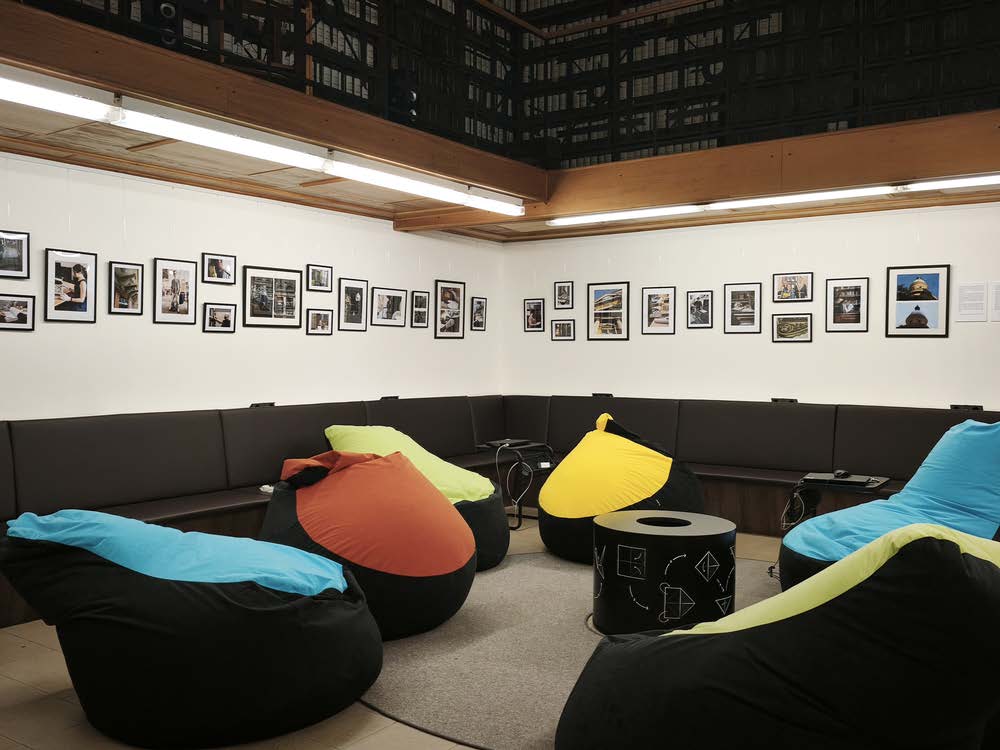
Next to the coat check, a carpeted relaxation zone with beanbag chairs is available to readers, made even more pleasant by immersive ceiling projections. We have relocated the vending machines from the lobby to the section near the kitchen, expanding both their selection and capacity, so that the room now serves physical and mental rejuvenation.

In addition to the former BoYL space, we have created two new communal spaces with direct access to the original room, which has expanded the available space by 30 seats. The furniture in the new rooms can be rearranged flexibly, suitable for both individual and group study, as well as for organising community programmes. In the smaller room, we have created additional group study areas, featuring reading materials that support students’ mental well-being, learning effectiveness, and sustainability awareness. The larger, circular room – equipped with an interactive display – will serve as a bookable venue for classes, student events, and other programs (e.g., a film club).

The official opening of the new community spaces will take place on 17 September 2026, as part of a conference organised to mark the 150th anniversary of the building’s opening; we warmly welcome all interested parties to attend. We welcome additional suggestions for acquiring academic literature via the “INeedABook” section of our website. We wish everyone a pleasant and enriching experience!

Source/author of illustration:
ELTE ULA

Interactive Exhibition about the Fascinating History of the 150-Year-Old Library Palace

Next to our short film screening on the grand staircase of the ELTE University Library and Archives, an interactive exhibition has opened, showcasing the one-and-a-half-century history and unique episodes of the historic library palace.

The exhibition offers a glimpse into lesser-known details of the library’s rich history. You can discover who once lived within the institution’s walls and where, why we still use library cards today, how the library became Gyula Juhász’s muse, and even why Zsigmond Móricz never became a librarian.

The installations placed on both sides of the grand staircase evoke the exciting stories from the library’s “legendarium.” Using the QR codes associated with each display panel, visitors can access additional images, documents, and interesting facts, allowing them to gain a deeper understanding of the building’s past and its hidden treasures.

Step into the library’s unique world, become part of a story that spans centuries, and experience the joy of discovery from a new perspective!

Source/author of illustration:
ELTE ULA